


Vaginal Atrophy Symptoms, Causes, and Hormone-Free Relief That Works
If you’re living with symptoms of vaginal irritation, dryness, and even urinary changes, you might feel completely alone…but rest assured, you definitely are not. Vaginal atrophy is more common and more disruptive than most people realize, perhaps because so few of us feel comfortable talking about it.
Fortunately, treatment for vaginal atrophy can increase your comfort and improve your confidence and quality of life. Read on as we discuss vaginal atrophy basics: what it is, what causes it, and what can help relieve it.
What is vaginal atrophy?
Vaginal atrophy is a condition in which the vaginal tissue becomes thinner, drier, and less elastic. A healthy vagina has many layers of thick, flexible tissue that form its walls. Most of these layers contain collagen and elastin, proteins that provide vaginal tissue its strength and flexibility.
As these tissues lose thickness and elasticity, the inner lining of the vagina smooths out, losing many of its ridges (rugae). These anatomical changes contribute to many of the symptoms people with vaginal atrophy report: itching, discomfort, pain with sex, etc.
Is vaginal atrophy the same as genitourinary syndrome of menopause (GSM)?
Not quite. You may hear these names used interchangeably, but technically speaking, there’s a difference. “Vaginal atrophy” narrowly refers to the changes defined above: thinning and decreasing flexibility of the vaginal walls. You might also encounter the terms “vulvovaginal atrophy” and “atrophic vaginitis” in this context: you might say that this condition has a branding problem.
So what about the even longer name, genitourinary syndrome of menopause (GSM)? GSM is broader: in addition to changes in the vaginal walls, it also encompasses changes affecting the vulva and urinary tract, along with the symptoms these changes can cause.
GSM is also specific to the tissue changes and symptoms that occur due to the hormonal changes of the menopause transition.
Despite these differences, many healthcare providers and medical researchers now use the term “genitourinary syndrome of menopause” interchangeably with vaginal atrophy. This is often because many consider GSM a less stigmatizing term than vaginal atrophy. After all, there’s nothing fun about hearing the word “atrophy” in the same sentence as “your vagina”.
However, it’s important to know that vaginal atrophy isn’t limited to those in the perimenopause or postmenopause years. You may experience vaginal atrophy symptoms during other times of low estrogen, including perimenopause, postmenopause, or other hormonal changes.
What causes vaginal atrophy?
Low estrogen levels are the direct cause of vaginal atrophy. While many people associate low estrogen and vaginal atrophy with menopause, there are many life events and medical conditions that can cause estrogen levels to decrease (leading to vaginal atrophy).
Common causes of vaginal atrophy include:
-
The menopause transition
-
Surgeries that cause a sudden transition through menopause (i.e., hysterectomy and/or removal of the ovaries)
-
Breastfeeding
-
Cancer treatments, such as chemotherapy, radiation therapy, and hormone therapy, for ovarian and breast cancer
-
Certain oral contraceptive pills
-
Lichen sclerosus, which primarily impacts the external genitals (the vulva)
-
Sjögren syndrome, an autoimmune condition that can cause vaginal dryness and decreased estrogen levels
All the causes listed here have one thing in common: they can all decrease your estrogen levels. As estrogen levels drop, blood flow to your vaginal tissue decreases, and tissue growth slows down. The mucosal lining of your vagina can’t replace old cells with new cells as quickly. This can make the vaginal epithelium (lining of your vaginal walls) thinner, less elastic, and more fragile.
What are the symptoms of vaginal atrophy?
The most prevalent symptoms of vaginal atrophy are vaginal dryness, itching or irritation, and abnormal discharge. However, the symptoms don’t stop there; symptoms are wide-ranging and, without treatment, can seriously impact your quality of life.

Vulvovaginal symptoms
Vaginal atrophy can cause a whole host of symptoms in and around your vagina. These changes occur as estrogen decreases and your tissues lose collagen and moisture. You may notice symptoms such as:
-
Vaginal dryness, itching, or irritation
-
Changes in your vaginal discharge
-
Narrowing or shortening of your vaginal canal
-
Loss of fullness of your vulva (the external skin and flesh outside your vagina), particularly in the labia (the “lips” surrounding your vaginal opening)
-
Loss of vaginal elasticity (the vagina doesn’t stretch easily or “bounce back” after stretching)
-
Vaginal shrinking (the vaginal canal gets shorter and narrower)
Decreasing estrogen levels also affects your vaginal microbiome, the vagina’s pH and balance of bacteria. Before menopause, estrogen helps your vaginal walls produce glycogen, a sugar that feeds healthy bacteria like Lactobacilli. These “good” bacteria help keep your vagina appropriately acidic and infection-free.
Without enough glycogen to “eat”, the good bacteria start to disappear, your vagina becomes less acidic, and the quantity and quality of your vaginal discharge get disrupted. This imbalance can lead to conditions such as bacterial vaginosis, a bacterial disruption that causes fishy vaginal odor.
Sexual symptoms
Common sexual symptoms of vaginal atrophy include:
-
Painful sex, especially with penetration, called dyspareunia
-
Bleeding after sex due to fragile vaginal or vulvar tissue
-
This may occur due to tears in the posterior fourchette, the thin skin at the back of the vaginal opening
-
Loss of self-lubrication
Over time, these physical changes can lead to the development of secondary problems with sex. These may include:
-
Anorgasmia (the inability to achieve orgasms)
-
Low libido (decreased sexual desire)
-
Vaginismus (involuntary vaginal muscle contractions upon attempts at penetration)
If your vaginal tissue feels thin, fragile, and irritated, severe vaginal atrophy can make an enjoyable sex life feel nearly impossible.
This feeling is common: in a survey of over 3,000 menopausal women with vaginal atrophy symptoms, 59% said their symptoms decreased their enjoyment of sex, and 23% said their symptoms negatively impacted their lives overall.
We see the same patterns in our clientele: NeuEve customers often tell us about how their vaginal atrophy symptoms escalated into sexual problems. Nearly one-third of NeuEve’s customers report that vaginal atrophy kept them from having sex at all. Fortunately, many also tell us how our products helped them recover!
If vaginal atrophy has wreaked havoc on your sex life, know that you don’t need to suffer in silence. Vaginal atrophy treatment options can absolutely help address the symptoms that interfere with enjoyable sex.
Urinary symptoms
Many people with vaginal atrophy, particularly those who are postmenopausal, also experience bladder problems and urinary tract infection symptoms.
While urinary conditions are beyond the scope of this article, know that you are not alone if you’re struggling with bladder leaks, strong urges to pee, and other frustrating symptoms. NeuEve offers an entire line of urinary support products to address bladder problems.
Acknowledging and learning about your symptoms is the first step to finding lasting relief. The next step is treatment: let’s discuss some options.
What are my treatment options for vaginal atrophy?
There is a wide range of treatment options for vaginal atrophy, including:
-
Prescription hormonal options such as low-dose vaginal estrogen creams, tablets, and suppositories, or vaginal dehydroepiandrosterone (DHEA).
-
CO2 laser treatments, such as the MonaLisa Touch system
-
Intravaginal radiofrequency treatment
-
Over-the-counter, hormone-free options, including NeuEve
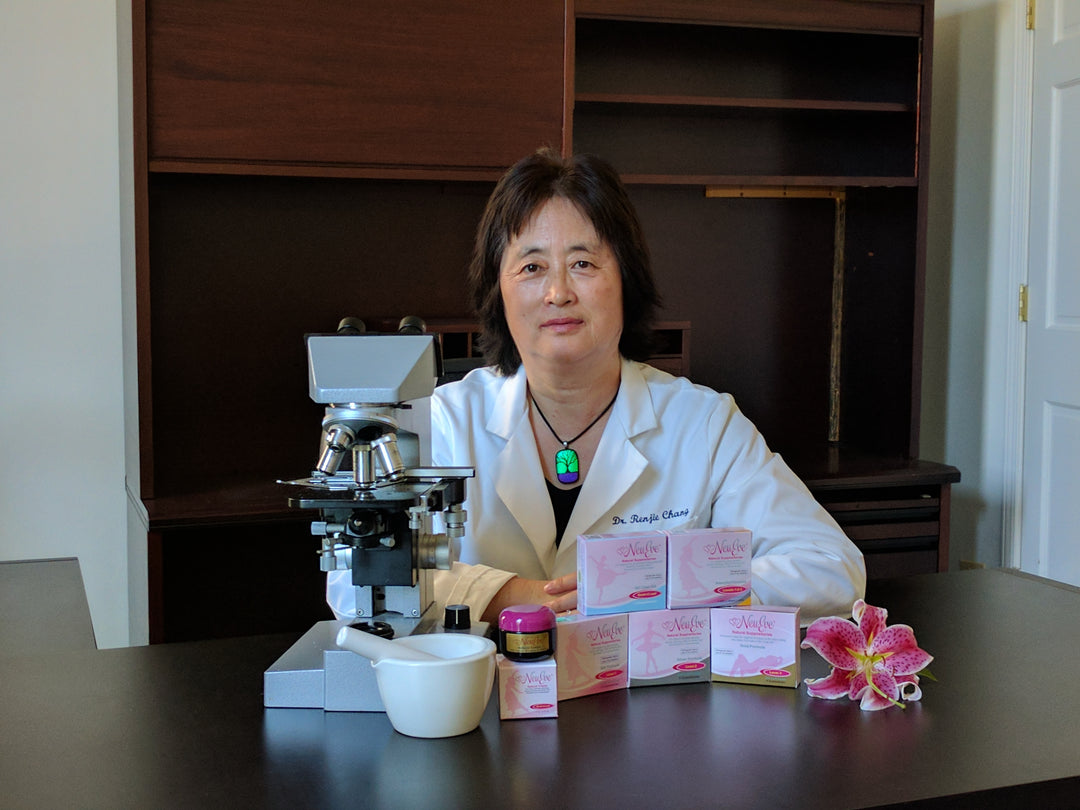
An OB-GYN, Dr. Renjie Chang, formulated NeuEve products to provide topical nourishment to the vaginal and vulvar tissues. Our products work to improve vaginal atrophy without hormones. This is a major plus if you’re unable or prefer not to use hormone therapy due to contraindications such as hormone-sensitive cancers or personal preference.
Natural, hormone-free solutions for vaginal atrophy
Different bodies respond best to different treatments, and not all treatments are appropriate for all people. Some women prefer or need a non-hormonal approach to treating their symptoms. If that sounds like you, here are some hormone-free options:
-
Vaginal moisturizers: Available as either a cream or a suppository, over-the-counter moisturizers rehydrate and nourish your vagina by absorbing into the tissue. They can help support your vagina’s natural acidity and typically help relieve symptoms for 2-3 days after application.
-
Vulvar salves: Vaginal atrophy can cause your vulva to be dry, itchy, and painful during sex. Natural vulvar salves for atrophy relief can help hydrate your vulvar skin, reducing irritation and supporting collagen and elasticity.
-
Lubricants: While they don’t last as long as moisturizers or salves, vaginal lubricants are specifically useful for reducing friction and discomfort during sex.
-
Supplements: Supplements with omega-7 (an essential fatty acid) and sea buckthorn oil can help provide moisture support for vaginal dryness by nourishing the mucous membranes throughout your body.
How long until I see improvement?
Improvement time depends on the type of treatment you’re using. You may quickly notice temporary relief from external salves and lubricants, while lasting changes from moisturizers and supplements may take longer.
Through many years of internal data tracking at NeuEve, we’ve calculated the average improvement times in people using our vaginal atrophy treatment kit. On average:
-
25% of NeuEve kit users see improvement in the first 3 days
-
50% report improvement within two weeks
-
75% see improvement in a month
-
95% experience improvement within 3 months of use
Remember: vaginal atrophy symptoms are common, but you don’t have to “just live with” them. While these symptoms won’t improve or go away on their own, treatment can help you find relief and feel like yourself again.
Sources
Dubik J, Alperin M, De Vita R. The biomechanics of the vagina: a complete review of incomplete data. npj Womens Health. 2025;3:4. doi:10.1038/s44294-024-00047-7
Salamon M; reviewed by Baute L. A new name for vaginal atrophy: genitourinary syndrome of menopause. Harvard Health Publishing. November 19, 2025. Accessed May 20, 2026. https://www.health.harvard.edu/womens-health/a-new-name-for-vaginal-atrophy-genitourinary-syndrome-of-menopause
Potter, N., & Panay, N. (2020). Vaginal lubricants and moisturizers: a review into use, efficacy, and safety. Climacteric, 24(1), 19–24. https://doi.org/10.1080/13697137.2020.1820478
McMahon LN, Handy AB, Jones AG, Mijares SA, Noon AE, Meston CM. (100) The effect of oral contraceptive pill type on vulvovaginal atrophy. J Sex Med. 2023;20(suppl 2):qdad061.096. doi:10.1093/jsxmed/qdad061.096
De Luca DA, Papara C, Vorobyev A, et al. Lichen sclerosus: The 2023 update. Front Med (Lausanne). 2023;10:1106318. Published 2023 Feb 16. doi:10.3389/fmed.2023.1106318
Gözüküçük M, Türkyilmaz E, Küçükşahin O, Erten Ş, Üstün Y, Yavuz AF. Effects of primary Sjögren's syndrome on female genitalia and sexual functions. Clin Exp Rheumatol. 2021;39 Suppl 133(6):66-72. doi:10.55563/clinexprheumatol/spnjy5
Zhang J, Sun Q, Wang A, et al. The association between Sjogren's disease and sex hormones: A case-control and Mendelian randomization study. SAGE Open Med. 2025;13:20503121251405020. Published 2025 Dec 9. doi:10.1177/20503121251405020
Miller EA, Beasley DE, Dunn RR, Archie EA. Lactobacilli Dominance and Vaginal pH: Why Is the Human Vaginal Microbiome Unique?. Front Microbiol. 2016;7:1936. Published 2016 Dec 8. doi:10.3389/fmicb.2016.01936
Calleja-Agius, J., & Brincat, M. P. (2015). The urogenital system and the menopause. Climacteric, 18(sup1), 18–22. https://doi.org/10.3109/13697137.2015.1078206
Faubion, S. S., Sood, R., & Kapoor, E. (2017). Genitourinary Syndrome of Menopause: Management Strategies for the Clinician. Mayo Clinic Proceedings, 92(12), 1842–1849. https://doi.org/10.1016/j.mayocp.2017.08.019
Tafuri A, Panunzio A, Mazzarella CR, Tricarico M, Tricarico EM. Impact of Vaginal Carbon Dioxide Laser Therapy Alone Versus Its Combination With Oral Bioactive Collagen Peptides, Ultra-Low Molecular Weight Hyaluronic Acid, and Other Functional Components on the Genitourinary Syndrome of Menopause: A Cohort Pilot Study in Italy. J Cosmet Dermatol. 2025;24(10):e70474. doi:10.1111/jocd.70474
Gueldini de Moraes AV, Costa-Paiva L, da Costa Machado H, Maciel TF, Mariano FV, Pedro AO. Comparison of the effect of noninvasive radiofrequency with vaginal estrogen and vaginal moisturizer in the treatment of vulvovaginal atrophy in postmenopausal women: a randomized clinical trial. Menopause. 2024;31(4):288-302. doi:10.1097/GME.0000000000002326
Larmo PS, Yang B, Hyssälä J, Kallio HP, Erkkola R. Effects of sea buckthorn oil intake on vaginal atrophy in postmenopausal women: a randomized, double-blind, placebo-controlled study. Maturitas. 2014;79(3):316-321. doi:10.1016/j.maturitas.2014.07.010


I’m not sure which I need with neueve. I’m 65, heystroctemy, continously burning after using antibiotics months ago for bv treatment, I’m sure vaginal atrophy. All test lately including uti,bv are negative but I’m continously burning abd uncomfortable. Trying estrodol cream from dr.but seems to make burning worse. Which neueve do you recommend to try?
———
NeuEve replied:
Hi Connie,
Clara here :)
Thank you for sharing this with us. You mentioned experiencing burning, and I wanted to ask if you’ve had a vaginal microbiome test done recently.
Burning can have several possible causes and isn’t always typical of BV, so getting tested may give us a clearer picture of what’s going on rather than trying to guess based on symptoms alone.
If you do get tested, you’re very welcome to email us your results, and we can take a look with you. 💛
Warmly, Clara
Leave a comment